Do You Have to Give Your Phone Number at Checkout? (US and Canada)
Usually no. What stores do with your number, the California and Massachusetts card rules, how to say no, and how to stop loyalty texts in US and Canada.
For a normal in store purchase, no: the number is usually for a loyalty program, a digital receipt or marketing, and you can say "no thanks" without affecting the sale. California and Massachusetts go further and bar stores from requiring or recording your phone number on a credit card purchase, except for things like delivery or installation.
The short version
- In store: the number is almost always optional.
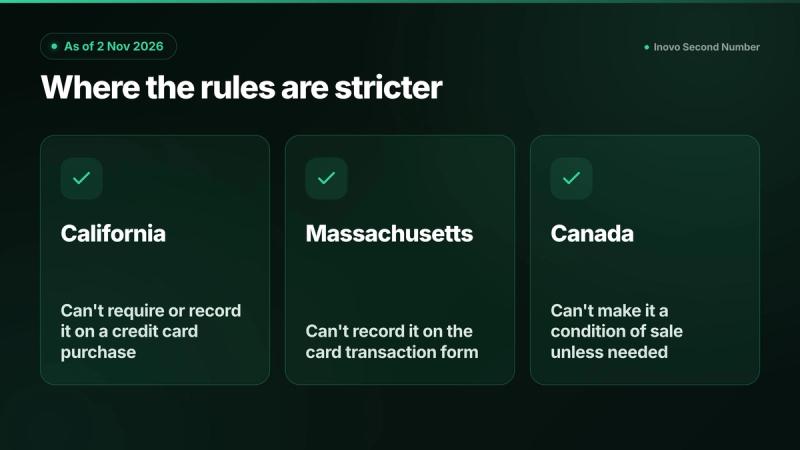
- California and Massachusetts: stores can't require or record it on a credit card purchase.
- Canada: a store generally can't make it a condition of sale unless it's needed.
- Already signed up? Reply STOP.
- Want the points without the spam? Use a separate number.
Why do stores ask for your phone number?
It ties your purchases to you. At the register, it usually does one of these jobs:
- Loyalty account key. Your number finds your points and member prices.
- Digital receipts. The store texts or emails the receipt instead of printing it.
- Return lookups. Some stores can find a purchase by number if you lose the receipt.
- Marketing. Texts, emails and offers based on what you bought, matched to your past purchases.
The cashier may also have a target. On Reddit, a former Payless worker said staff were tracked against a sign up quota, and missing it could mean a sassy comment or fewer hours.
Do you have to give it?
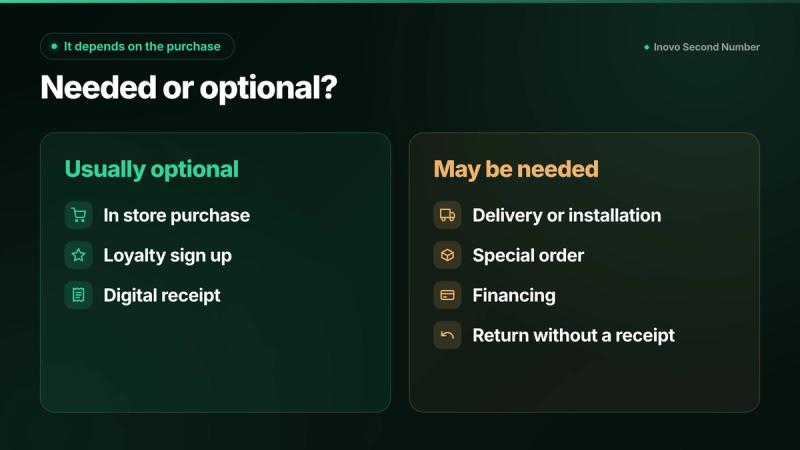
For a normal in store purchase, no. Giving your phone number at checkout is optional, and you can pay and leave without it.
A store may genuinely need it for:
- Delivery or installation
- A special order that will arrive later
- Financing or a store credit application
- Store pickup for an online order
- A return without a receipt, where the number helps find the sale
Not sure? Ask: "Is that required for this purchase?" If not, skip it.
Is it illegal for a store to ask for your phone number?
In most places, no. Asking is legal, and you can simply decline. A few places go further, as of 2 Nov 2026. This is general information, not legal advice, so check your local rules.
California
California's Civil Code 1747.08 says a business that accepts credit cards may not "request, or require as a condition to accepting the credit card as payment" personal identification information that it records. The law says this includes "the cardholder's address and telephone number."
In Pineda v. Williams-Sonoma (2011), the California Supreme Court held that a ZIP code counts too, so "requesting and recording a cardholder's ZIP code, without more, violates the Credit Card Act."
There are exceptions. They include deposits, cash advances, information the law requires, ZIP codes at gas pumps used only to prevent fraud, and information for "shipping, delivery, servicing, or installation" or special orders. Online purchases are treated differently: in Apple v. Superior Court (2013), the court held the law doesn't apply to online purchases of products you download.
Massachusetts
Chapter 93, section 105 says a business accepting a credit card can't write or require personal identification information "not required by the credit card issuer" on the transaction form, including your "address or telephone number." A store can still ask for details for shipping, delivery, installation or a warranty if you give them voluntarily.
In Tyler v. Michaels Stores (2013), the state's highest court said a ZIP code counts, and that the rule covers electronic forms as well as paper ones. A violation is an unfair and deceptive practice. You can notify the Office of Consumer Affairs and Business Regulation or the Attorney General.
Other states
Rules differ, and most states have no checkout specific law. Check your state attorney general's consumer protection pages.
Canada
Under PIPEDA, the federal privacy law, the Privacy Commissioner's consent guidelines say people can't be required to consent to collection beyond what is necessary to provide the product or service, and "they must be given a choice."
British Columbia has its own privacy law. The BC privacy commissioner's retail guidance says a store may ask for a phone number for a reasonable purpose with consent, but it "cannot require a customer to provide this information as a condition of sale unless it is necessary for the transaction."
How do you say no without it being awkward?
Keep it short:
- "No thanks, I'll skip it."
- "Is it required for this purchase?"
- "Can I use the receipt instead?"
On a card terminal, look for a Skip button. Online, watch for pre checked boxes that sign you up for texts. In Canada, the CRTC's anti-spam FAQ says a business "cannot use a pre-checked box" to get your express consent.
What if you already gave your number?
You can still stop the texts.
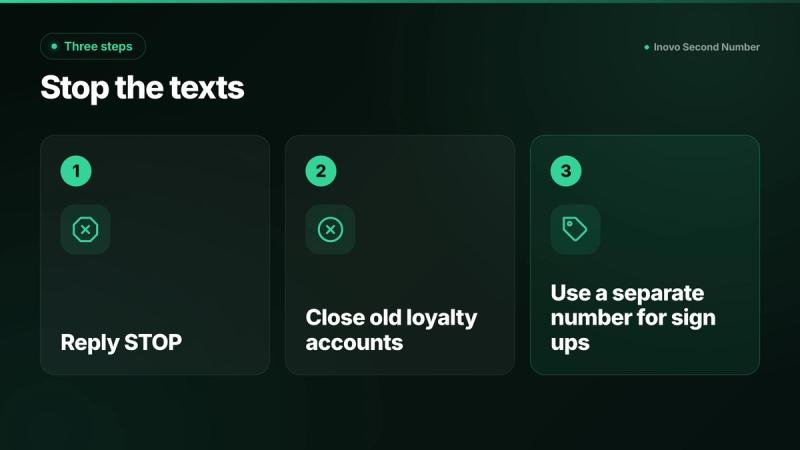
Reply STOP. In the US, FCC rules in force since 11 April 2025 say texters covered by the federal robocall law must honor an opt out made by any reasonable means, such as replying STOP, within 10 business days (Federal Register). An update effective 25 Nov 2026 lets a sender name one opt out method, such as replying STOP, but it must show that method in the text. Replying STOP to a marketing text covers that sender's future marketing texts. In Canada, CASL requires a working unsubscribe, and the CRTC says requests must be processed "no later than 10 business days" after receipt.
Don't count on the Do Not Call list. New York's consumer protection division warns that joining a loyalty program lets a company contact you "even if your phone number is registered on the National Do Not Call Registry."
Close old programs. The same alert says to close loyalty programs you no longer use and ask the company to remove your information.
Watch for fakes. Scammers send texts that mimic real stores. If unsure, don't reply; opt out on the company's website.
Number spread further? Our guide for when you gave your number to a match covers people search opt outs. Getting calls after a contractor quote? See why one quote request brings so many calls.
Should you use a separate number for loyalty programs?
It's a sensible middle ground. You keep the points and member prices, and your main number stays off marketing lists and data shares. Our guide to what a second number hides explains the limits.
To set it up:
- Pick a number. Choose a US or Canadian number in a second number app; our guide to getting a second phone number compares options.
- Use it only for shopping. Loyalty programs, digital receipts and retail sign ups.
- Label it "Shopping" so you know which line a text came in on.
Keep loyalty sign ups on an Inovo Second Number instead of your main number. It's a real US or Canadian number on the iPhone or Android you already have. Each number can have its own label. Prices: see in app.
Download on the App Store · Get it on Google Play
An honest note: a separate number doesn't stop a store texting it. It keeps those texts off your main number, and you can still reply STOP. Inovo is for your own person to person texts, up to 20 outbound messages per day, each composed and sent personally. Verification codes work with most services, not all, so keep banking on your main number. Details are in the Inovo FAQ.
Choose a number you can keep; our guide to free second phone numbers explains why some get taken back. Selling online too? See our guide to a separate number for marketplace selling. Getting insurance quotes online? Here’s what number to give insurance quote sites.
FAQ
Do I have to give my phone number at checkout?
Usually no. For a normal in store purchase, the number is for a loyalty program, a digital receipt or marketing, and you can say no thanks. A store may genuinely need it for delivery, installation, special orders, financing, pickup or a return without a receipt. Check your local rules for anything stricter.
Is it illegal for a store to ask for my phone number in California?
On a credit card purchase, a California store can't request or require your phone number and then record it, under Civil Code 1747.08. Exceptions include delivery, installation, special orders and information the law requires. Online purchases of downloadable products are treated differently. This is general information, not legal advice.
Can a store ask for my ZIP code when I pay by card?
In California and Massachusetts, courts have held that a ZIP code counts as personal identification information on credit card purchases, so stores generally can't require or record it. California allows ZIP codes at gas pumps when used only to prevent fraud. Elsewhere, rules differ, so check your local rules.
Can a store refuse to sell to me if I don't give my number?
It depends on where you are. California and Massachusetts limit stores collecting phone numbers on credit card purchases, and in Canada a store generally can't make your number a condition of sale unless the transaction needs it. Elsewhere, ask whether it's required, and check your local rules.
Does the Do Not Call list stop texts from a store loyalty program?
Not by itself. New York's consumer protection division warns that joining a loyalty program lets the company contact you even if your number is on the National Do Not Call Registry. To stop the texts, reply STOP or opt out on the company's own website, and close programs you no longer use.
How do I stop texts from a store?
Reply STOP to a genuine text from the store, or use the opt out method the text names. In the US, covered texters must honor opt outs within 10 business days, and CASL sets the same limit in Canada. If a text might be fake, don't reply; opt out on the store's website. Close old loyalty accounts you don't use.
Can Canadian stores require my phone number?
Generally no, unless the transaction needs it. Federal privacy guidance says people can't be required to consent to collection beyond what's necessary for the product or service. BC's privacy commissioner says a store cannot require a phone number as a condition of sale unless it is necessary for the transaction.
Keep your main number off the receipt
You can skip the number at most checkouts and stop the texts if you already gave it. Keep loyalty sign ups on an Inovo Second Number instead of your main number. It's a real US or Canadian number on the iPhone or Android you already have. Start from the Inovo homepage. Prices: see in app.
Related guides
- Should Landlords Give Tenants Their Personal Number? (US and Canada)Landlords in the US and Canada: what your lease must show, why the number has to ring, and how to give tenants a separate number on the phone you own.
- Gave Your Number to a Match and Regret It? Here's What to Do NextRegret giving a dating match your real number? Block, report and lock your carrier account in 10 minutes, and know when it is time to report a scam.
- Free Second Phone Number: What's the Catch, and When Is Free Good Enough?Free second number apps are real, but they cost you in ads, lost numbers and blocked codes. Here is each app's catch, sourced, and when free is fine.

