How to Get a Second Phone Number in 2026: Best Apps, Hidden Traps, and What Actually Works
Need a second phone number? We break down the top apps, what to look for, what to skip, and why most "free" options cost you more than you think.
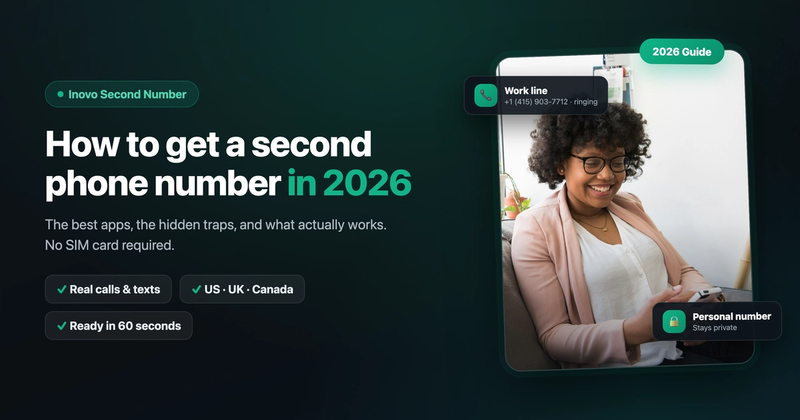
There's a moment most people hit at some point. A client texts at 11pm. A buyer from your Shopify store calls your personal number and you don't recognise them. A work call interrupts dinner and your family gives you that look.
And you think: I really need a separate number for this stuff.
The frustrating part is that getting a second phone number should be simple in 2025. And technically it is. What's not simple is finding one that actually works reliably once you're depending on it. Most of the apps people end up downloading were built for either burner anonymity or "good enough for free" territory, and neither was designed with your business on the line.
So here's the honest breakdown: who actually needs a second number, which apps are worth your time, what the sneaky limitations are, and what to look for before you sign up.
Why People Get a Second Number (And Why the Bar Keeps Raising)
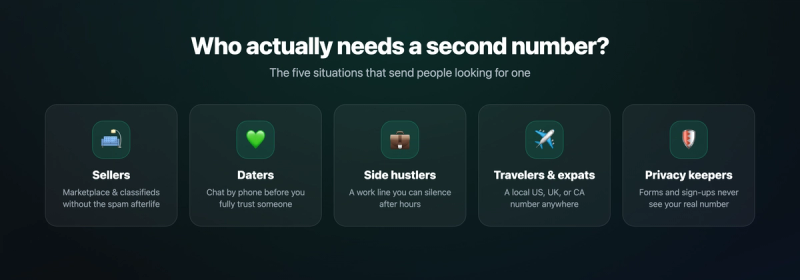
The reasons vary more than you'd expect.
Freelancers and consultants put a business number in their proposals and on their site so clients can reach them, while keeping their personal number for, you know, personal things. When a client relationship ends, ideally that number can too.
Shopify and marketplace sellers need something buyers can call or text, without that number being tied to their personal identity. Running three storefronts and handing out your real mobile to all of them is a fast way to lose your mind.
Remote teams at small agencies want a consistent contact number for clients, regardless of who on the team is actually available that day. Nothing kills professionalism faster than "oh, that's Ahmed's personal number, he's off today."
And then there's just general privacy. Every time you sign up for a service, list something for sale, or join a new platform, you hand over your phone number. That number ends up in databases, gets scraped, and eventually becomes the reason you're getting calls about your car's extended warranty twice a day. A second number takes that hit while your real number stays clean.
None of this is complicated. But it does require a number that actually works. Calls connect. Texts arrive. And the backend doesn't randomly lock your account because you had the nerve to message more than three clients in an afternoon.
The Apps Everyone Mentions (And the Part They Bury in Small Print)
Google Voice
Google Voice shows up first in almost every "second phone number" search. The reason is simple: it's free for US personal use, hooks into your existing Google account, and the call quality is fine for most situations.
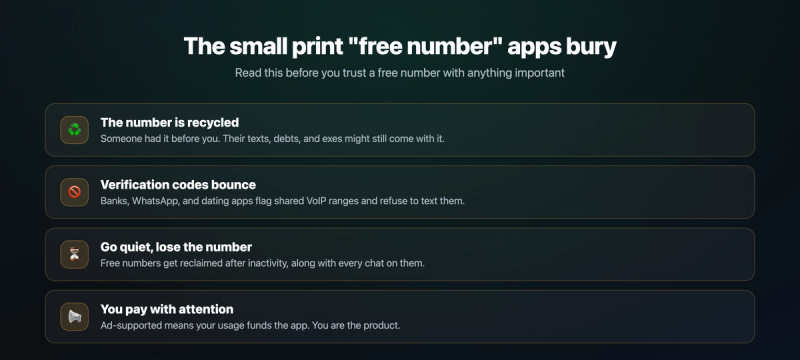
The issues start when you try to use it for anything approaching actual business use. Google Voice has a long track record of unreliable SMS delivery. More importantly, if the system decides your messaging looks spam-like (sending to multiple contacts, including links, not getting enough replies) it locks your account for 24 hours. Do it a few times and you risk permanent suspension. No appeal, no guarantee you'll get your number back.
For a number you've put on your website or given to fifty clients, that's a genuinely awful situation to be in.
It's also US-only to set up, has no team features, and the app itself feels like something Google is keeping alive out of obligation rather than enthusiasm.
Best for: Casual personal use if you're in the US and only need to take the occasional call.
Not for: Running a business, working with clients regularly, or sending any kind of outbound messages at volume.
Burner
Burner does exactly what it says. You get a number, use it for a project or a marketplace listing, and when you're done with it you delete it. For that specific job, it's solid.
The pricing gets awkward when you need a number longer term. Monthly subscriptions for something you might not use heavily every month adds up, and managing multiple lines costs more than it should. The app is clean but it's built around the "temporary number" idea. It's not designed to be your main business line.
Best for: Selling stuff online, dating apps, short-term projects where you want a number you can genuinely walk away from.
Not for: Any situation where you need the same number to be reliable for months and you can't afford it to just disappear.
TextNow
TextNow is free with ads, which is genuinely attractive. You get a number, you can call and text over Wi-Fi, and it costs nothing to get started.
The problem is that TextNow numbers are widely flagged as VoIP numbers across platforms. A lot of services actively screen them out for verification purposes. Trying to verify a WhatsApp Business account, receive OTP codes from financial services, or sign up for platforms with stricter phone checks? TextNow regularly fails those. The number can also get recycled if your account sits inactive long enough, which is a fun surprise if you come back to it after a holiday.
Best for: Very casual use, basic texting, situations where you just need any number and permanence genuinely doesn't matter.
Not for: Anything requiring carrier-level credibility, business verification, or consistent long-term use.
Hushed
Hushed is the most grown-up of the "privacy-first" options. Prepaid and subscription plans, international numbers, decent area code selection, works across devices. If you need a second line for a few months without a long-term commitment, Hushed handles it well.
The ceiling is the same one most internet-based number services hit: verification flows on stricter platforms will sometimes reject it, and if you need to run any kind of automated outbound SMS (think order confirmations or appointment reminders), you'll quickly run into 10DLC compliance walls that Hushed isn't built to help you clear.
Best for: Short-to-medium projects, international numbers, flexible use without locking into a long contract.
Not for: High-volume SMS, automated business messaging, or daily use where reliability is non-negotiable.
What to Actually Look For Before You Sign Up
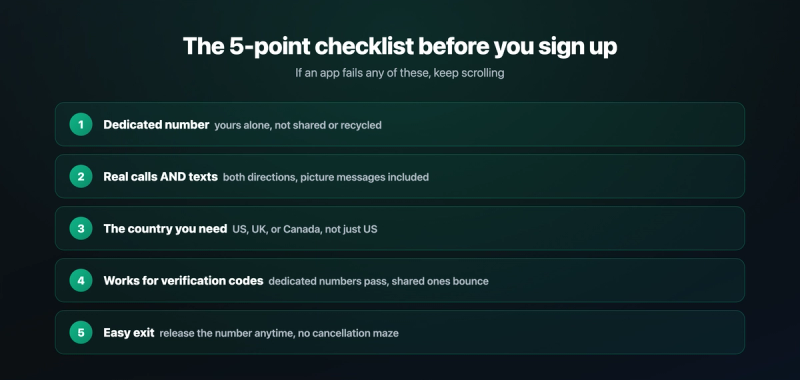
Most people skip this step, pick the first app that comes up, and then discover the limitation three weeks later when it actually matters.
Does the number stick around? Free apps recycle inactive numbers. A number you've given to a hundred clients could belong to someone else six months from now. Check the provider's policy on number permanence before you commit.
Will it pass carrier checks? There's a real difference between a number that works for personal calls and one that passes SMS filtering for business use. A2P 10DLC is the US carrier standard that governs whether your business texts actually reach people or land in spam purgatory. If you're sending client messages, order updates, or anything at volume, this matters more than the monthly price.
What's the actual SMS delivery rate? A virtual number that demos beautifully and then delivers 60% of your messages in production is not a virtual number you should be paying for. Delivery rates depend on which carriers the provider routes through and how well they manage their number pool. Ask, or look for it in reviews.
What are the real fees? Low headline price, then per-minute charges for outbound calls, per-SMS costs above a threshold, and extra fees for porting a number out. Read the pricing page properly.
Can your team use it? If anyone else at your company ever needs to send or receive on this number, a shared inbox is essential. A number only one person can access becomes a single point of failure pretty fast.
VoIP vs SIM: What's the Actual Difference
Worth clearing up because it comes up constantly.
A SIM-based number runs on a cellular network and works independently of internet access. It's exactly what your current phone number is. Calls and texts go through a carrier tower, not your Wi-Fi.
A VoIP number runs through an app over the internet. It's cheaper, easier to manage, and works from any device. Call quality depends on your connection. Some carrier verification systems are specifically built to detect and reject VoIP numbers, which is why certain platforms push back on them.
For most day-to-day business use, VoIP is completely fine. Client calls, team communication, customer support, all of that works well on a solid VoIP product. Where you notice the difference is in specific verification flows and in spots with no data connection at all.
Why We Built Inovo
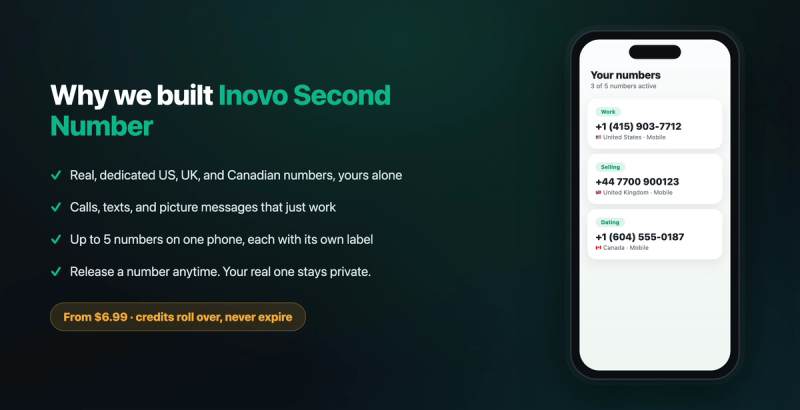
If you've read through the apps above and the main thing you took away is "I just need something that reliably works," that's the exact gap Inovo is built to fill.
The second number app market splits roughly into two camps. One side has the throwaway privacy apps (Burner, Hushed) that are great for short-term use and not much else. The other side has the free utilities (Google Voice, TextNow) that survive on brand recognition more than on quality. Neither camp built their infrastructure for someone who depends on that number for actual business.
Inovo runs on carrier-grade infrastructure, handles both calls and SMS reliably, and is built for how people actually use a second line in practice: consistently, across clients, across projects, without drama. The interface is clean because nobody should have to fight an app just to read a message.
If you're a freelancer sick of client calls bleeding into your personal life, a seller who needs a proper contact number for your storefront, or a small team that wants shared communication without paying enterprise prices, you can get your number in a few minutes. No SIM card needed, no complicated setup.
Frequently Asked Questions
Do I need a second phone number? If your personal number is your business number right now, yes. A second number keeps your real number private, absorbs the spam, and lets you actually stop working when the day ends.
Can I get a second number without buying a new SIM? Yes. A virtual number app gives you a fully working second line inside an existing app on your current phone. No new SIM, no new device, no trip to a carrier store.
What's the difference between VoIP and a SIM-based number? A SIM number runs on a cellular network through a carrier. A VoIP number runs over Wi-Fi or mobile data through an app. VoIP is cheaper and easier to manage. Call quality depends on your internet connection rather than a signal tower.
Is Google Voice actually good for business? For personal casual use, it's fine. For business use where you're messaging clients regularly and can't afford a random 24-hour lockout, it's genuinely risky.
What is A2P 10DLC and why should I care? It stands for Application-to-Person messaging on 10-digit long codes. It's the US carrier standard that determines whether your business texts reach customers or get silently filtered as spam. If you send order confirmations, appointment reminders, or follow-ups, you need a provider that handles this on the backend. Most cheap second number apps don't.